

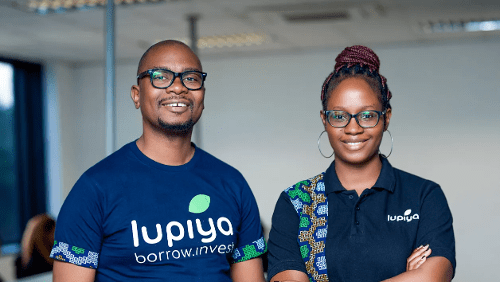
Lupiya has closed an $11.25 million Series A round as the Zambian digital bank prepares to scale its lending products, expand embedded finance partnerships and push beyond its home market into Southern and East Africa.
Lupiya has closed an $11.25 million Series A round as the Zambian digital bank prepares to scale its lending products, expand embedded finance partnerships and push beyond its home market into Southern and East Africa.
The round was led by IDF Capital’s Alitheia IDF Fund, with participation from INOKS Capital and development finance institution KfW DEG.
CEO and co-founder Evelyn Chilomo Kaingu described a fundraising journey that stretched nearly two years, marked by repeated rejections and periods when founders had to inject personal funds to keep operations running.
She said expectations have risen as Lupiya has matured, with governance requirements tightening and due diligence processes becoming more exhaustive.
Lupiya will channel the new capital into strengthening its technology stack, expanding its product set and growing its footprint regionally.
The company has opened a further funding round aimed at increasing the size of its lending book and accelerating embedded finance offerings, though it declined to disclose current loan book size, customer numbers or revenue figures.
Early backers include Enygma Ventures, which invested $1 million during the pandemic, while partnerships with Mastercard provide access to payment rails that support digital transactions.
Mastercard’s country director for Zambia and Malawi, Vincent Malekani, framed the collaboration as part of the card network’s broader effort to bring more people into the digital economy.
Polo Leteka, founder of IDF Capital and co-managing partner of the Alitheia IDF Fund, said the investment aligns with the fund’s focus on financial inclusion and gender-lens investing. The Alitheia IDF Fund is positioned to back businesses that can deliver measurable inclusion outcomes, and Lupiya’s model resonated with that mandate.
Zambia’s formal account ownership sits below regional peers, with World Bank data showing roughly 45 percent of adults had accounts at financial institutions as of 2021, and a persistent urban-rural and gender gap in access.
Digital lenders such as Lupiya seek to bridge that divide, but face operational headwinds including currency volatility, regulatory uncertainty and higher costs when serving low-density markets.
Lupiya’s long-running use of varied financing instruments through debt, equity, convertible notes, grants and non-dilutive capital shows a pragmatic approach to funding in a tough environment.
For founders in the region, the patchwork of instruments often becomes the only way to maintain momentum while meeting increasingly stringent investor expectations.
The company counts institutional supporters such as Google, the World Bank and the International Trade Centre among its backers, although the precise nature of that support ranges from programmatic collaboration to technical assistance.
With Lupiya preparing to enter new markets, formal partnerships and local compliance strategies will be critical to avoid missteps and to tailor products to different regulatory regimes.
Lupiya’s next phase will test whether a Zambia-born neobank can translate product-market fit into regional scale without eroding margins.
This Series A proves there is high demand for all-in-one fintech platforms. It also shows that landing big checks from major investors isn’t easy, as it takes real grit and persistence.
This post was culled from Launch Base Africa.
Don’t miss important articles during the week. Subscribe to techbuild weekly digest for updates